
09 Sep
Static mockups tell only half the story. While Figma has revolutionised how designers create and collaborate on user interfaces, the gap between static designs and dynamic user experiences has remained a challenge for many design teams. Animation breathes life into interfaces, transforming flat screens into engaging, intuitive experiences that guide users through their journey.
figma animation design tips
Use smart Figma animation design tips to add smooth motion to your screens. Animate UI with Figma easily using simple tools like Smart
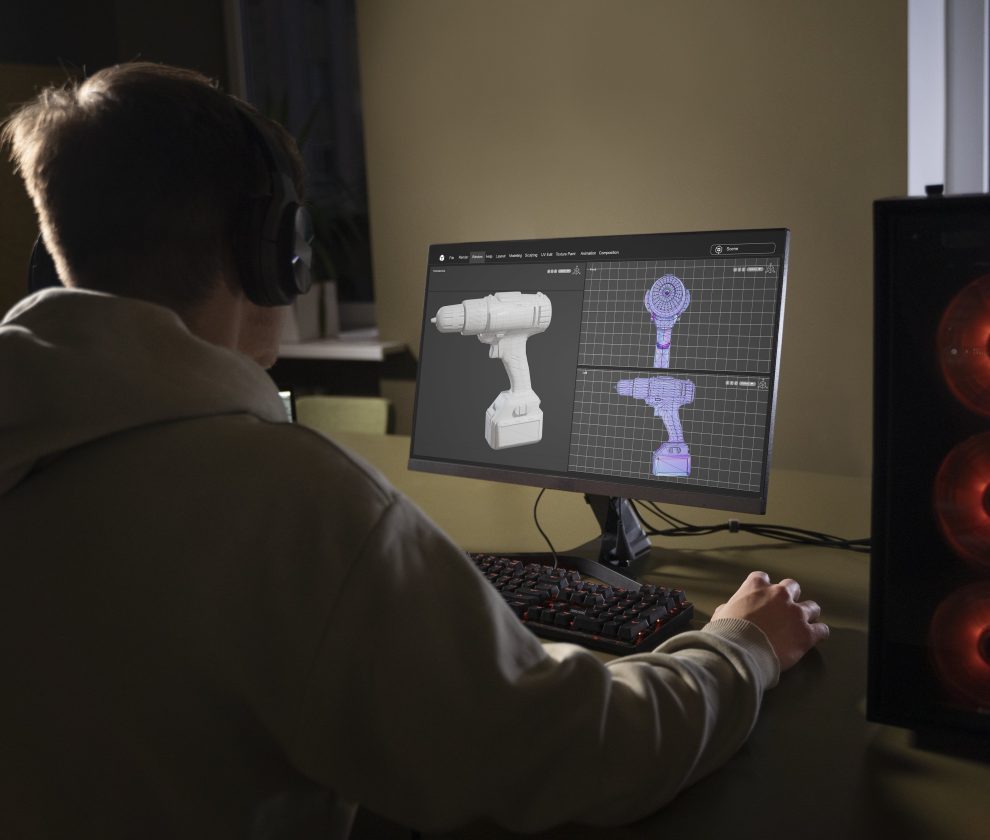
figma animation design tips
The missing piece has been a seamless way to create sophisticated animations without leaving the Figma ecosystem or requiring extensive coding knowledge. Traditional animation workflows often involve multiple tools, complex handoffs, and countless iterations that slow down the design process. Designers find themselves choosing between quick static prototypes or time-consuming animation workflows that require specialized skills.
This challenge becomes even more pronounced when working with development teams that need precise specifications for implementing animations in the final product. The disconnect between design intent and development execution often results in animations that fail to match the original vision, leading to compromised user experiences and frustrated stakeholders.
Please enter a new generation of animation tools that bridge this gap, making professional-quality animations accessible to every designer, regardless of their technical background. These tools integrate directly with Figma, allowing designers to create, iterate, and refine animations within their familiar workspace while maintaining the collaborative benefits that make Figma so powerful.
Why Animation Matters in Modern UI Design
Animation serves multiple critical functions in user interface design beyond mere visual appeal. Well-crafted animations provide essential feedback to users, confirming that their actions have been registered and processed by the system. When a user taps a button, a subtle animation communicates that the interface has responded, creating a sense of direct manipulation that builds confidence in the system.
Cognitive load reduction represents another significant benefit of thoughtful animation implementation. Rather than forcing users to process sudden changes in interface states, animations provide visual continuity that helps users understand relationships between different screens and elements. A card that smoothly transitions from a list view to a detailed view helps users maintain their mental model of the interface structure.
Micro-interactions powered by animation create emotional connections between users and digital products. A playful loading animation can transform a potentially frustrating wait time into a moment of delight. These small touches accumulate over time, contributing to an overall perception of quality and attention to detail that differentiates exceptional products from merely functional ones.
Professional animation also communicates brand personality through motion design language. The timing, easing, and style of animations can convey whether a brand is playful or serious, fast-paced or contemplative, innovative or traditional. This subtle communication happens at a subconscious level, influencing user perception before they consciously process the visual elements.
Getting Started with Figma Animation Tools
Modern animation tools for Figma eliminate the steep learning curve traditionally associated with motion design. Instead of requiring mastery of complex timeline-based animation software, these tools leverage the familiar layer structure and properties that Figma designers already understand. The transition from static design to animated prototype becomes as natural as adding a new frame to an existing design file.
The setup process typically involves installing a plugin or connecting to a companion application that reads your Figma files directly. This integration preserves your existing layer organization, naming conventions, and component structure, ensuring that animations enhance rather than complicate your design workflow. No need to recreate assets or restructure files to accommodate animation capabilities.
User interface elements within these tools mirror Figma’s design philosophy of intuitive, visual controls. Properties like opacity, position, scale, and rotation can be animated using familiar interfaces rather than complex code or mathematical expressions. This approach allows designers to focus on creative decisions rather than technical implementation details.
Real-time preview capabilities ensure that animations can be refined iteratively without lengthy render times or export processes. Changes to timing, easing, or animation properties update immediately, allowing for rapid experimentation and refinement that matches the speed of modern design thinking.
Exploring Pre-Made Animation Presets
Pre-made animation presets serve as both time-savers and educational tools for designers new to motion design. These carefully crafted animations embody best practices for timing, easing, and visual hierarchy while providing starting points that can be customized for specific design needs. Rather than beginning with blank timelines, designers can select presets that approximate their desired effect and then refine the details.
Fade and slide animations represent foundational presets that work across virtually any interface design. These subtle transitions provide visual continuity without drawing excessive attention to the animation itself. A gentle fade-in for modal dialogues or a smooth slide transition between navigation states creates professional polish without overwhelming the content.
Scale and rotation presets offer more dramatic effects suitable for attention-grabbing elements or playful interface moments. A subtle scale animation on button hover states provides tactile feedback, while more pronounced scaling effects can emphasize important calls-to-action or celebrate user achievements. Rotation animations work particularly well for loading states or icon transitions that need to convey ongoing processes.
Bounce and elastic presets introduce personality into interfaces through their characteristic overshoot and settling behaviour. These animations feel organic and playful, making them excellent choices for consumer applications or situations where brand personality should shine through. The key lies in applying these more expressive animations strategically rather than using them ubiquitously throughout an interface.
Complex combination presets demonstrate how multiple animation properties can work together to create sophisticated effects. These presets often combine position changes with opacity shifts, scale adjustments, and rotation elements to achieve results that would be time-consuming to build from scratch. Studying these combinations provides valuable insights into animation composition principles.
Customising Timing and Easing
Animation timing governs the pace at which interface changes occur, directly impacting user perception and system responsiveness. Fast animations, typically lasting 200-300 milliseconds, work well for simple state changes like button presses or menu toggles. These quick transitions acknowledge user input without delaying the interface response, maintaining the illusion of direct manipulation.
Medium-duration animations, ranging from 300-500 milliseconds, suit more complex transitions like screen changes or content loading states. This timing allows users to perceive and understand the relationship between interface states without feeling rushed or impatient. The slightly longer duration provides space for more sophisticated easing curves that add refinement to the motion.
Longer animations, extending beyond 500 milliseconds, should be reserved for special circumstances like onboarding sequences or celebration moments where drawing attention to the animation itself serves a specific purpose. Extended timing can quickly become tedious in frequently repeated interactions, so careful consideration of user context is essential.
Easing curves determine how animation speed changes over time, transforming mechanical linear motion into natural, organic movement that feels comfortable to human perception. Linear easing, where speed remains constant throughout the animation, typically feels artificial and should be avoided except for specific technical effects like progress indicators.
Ease-out curves, which begin quickly and gradually slow down, mirror natural physical movement and feel particularly appropriate for entrance animations. When elements appear on screen, the initial quick movement catches attention while the gradual deceleration allows users to focus on the final state without jarring stops.
Ease-in curves start slowly and accelerate, working well for exit animations where elements leave the interface. The gradual start allows users to process the beginning of the transition, while the acceleration ensures the element doesn’t linger unnecessarily on screen.
Ease-in-out curves combine both acceleration and deceleration, creating movement that feels balanced and polished. These curves work well for transitions between states where neither entrance nor exit deserves special emphasis, such as toggles between different content views.
Creating Custom Animations from Scratch
Building custom animations requires understanding the fundamental properties that can be animated and how they combine to create compelling motion design. Position changes form the foundation of most custom animations, allowing elements to move along paths that guide user attention and create spatial relationships between interface components.
Opacity animations control visibility and can create sophisticated layering effects when combined with other properties. Rather than simply making elements appear or disappear instantly, opacity transitions provide visual continuity that helps users understand content relationships. Staggered opacity changes across multiple elements can create revealing effects that draw attention to important information.
Scale animations alter element size and can convey emphasis, hierarchy, or interaction feedback. Subtle scale increases on hover states provide tactile feedback, while more dramatic scaling can emphasize important moments in user flows. Non-uniform scaling, where width and height change at different rates, can create interesting morphing effects for advanced transitions.
figma animation design tips
Use smart Figma animation design tips to add smooth motion to your screens. Animate UI with Figma easily using simple tools like Smart
figma animation design tips
Rotation animations add dynamic movement that can convey ongoing processes, playful interaction, or directional changes. Loading spinners represent the most common application, but rotation can also enhance icon transitions, create attention-grabbing effects, or provide visual metaphors for interface actions.
Path-based animations move elements along custom curves rather than straight lines, enabling organic movement that follows natural motion principles. These animations require more planning but can create distinctive effects that set interfaces apart from standard linear transitions. Curved paths work particularly well for floating action buttons, drag-and-drop interactions, or complex screen transitions.
Staggered animations coordinate multiple elements to create choreographed sequences that reveal content progressively rather than all at once. These effects can transform overwhelming information dumps into digestible, scannable layouts that respect cognitive processing limitations while maintaining visual interest.
Best Practices for UI Animation
Animation performance directly impacts user experience, particularly on mobile devices or lower-powered hardware. Optimizing animations requires understanding which properties are computationally expensive and choosing alternatives that achieve similar visual effects with better performance characteristics. Transform properties like translate, scale, and rotate typically perform better than layout properties like width, height, or position changes.
Consistency across animation libraries creates cohesive user experiences where motion feels intentional rather than arbitrary. Establishing timing standards, easing preferences, and appropriate use cases for different animation types ensures that motion enhances rather than distracts from interface functionality. Documentation of these standards helps maintain consistency as design systems evolve and team members change.
Accessibility considerations require providing options for users who prefer reduced motion or have vestibular disorders that make certain animations uncomfortable or disorienting. Many operating systems now include reduced motion preferences that interfaces should respect by either eliminating animations or substituting gentler alternatives.
Context awareness ensures animations serve the user’s current goals rather than merely providing visual entertainment. Task-focused applications may benefit from subtle, efficient animations that support productivity, while entertainment or consumer applications embrace more expressive motion that reinforces brand personality.
Progressive enhancement approaches layer animation capabilities on top of functional static designs, ensuring that core functionality remains accessible even when animations fail to load or perform poorly. This strategy protects user experience while allowing for motion design exploration in optimal conditions.
Advanced Animation Techniques
Layered animation sequences coordinate multiple elements across time to create complex, cinematic effects that can transform ordinary interfaces into memorable experiences. These sequences require careful planning and choreography to ensure that individual animations support rather than compete with each other for user attention.
Interactive animations respond to user input in real-time, creating direct manipulation experiences that feel responsive and engaging. Drag interactions, gesture responses, and input-driven animations blur the line between interface and tool, making digital experiences feel more tangible and controllable.
Physics-based animations simulate real-world behaviour through spring systems, momentum, and collision detection. These animations feel natural because they follow physical laws that users intuitively understand, creating interfaces that respond predictably to user actions while maintaining organic movement characteristics.
Morphing animations transform one shape into another through calculated intermediate states, enabling sophisticated transitions between different interface elements or content types. These effects work particularly well for icon transitions, loading states, or dramatic content changes that benefit from visual continuity.
Particle systems create dynamic, organic effects through coordinated movement of multiple small elements. While computationally intensive, particle animations can create distinctive brand moments, celebrate user achievements, or provide ambient background motion that adds life to otherwise static interfaces.
Integrating Animations into Design Systems
Animation specifications require the same systematic approach as colour palettes, typography scales, or component libraries. Documenting timing values, easing curves, and appropriate use cases ensures that animations can be implemented consistently across different platforms and by different developers.
Component-level animation definitions establish how interactive elements should behave across various states and contexts. Button hover states, form validation feedback, loading indicators, and navigation transitions all benefit from standardized animation behaviours that reinforce overall design system coherence.
Platform considerations acknowledge that animations may need to be adapted for different devices, operating systems, or technical constraints. Web animations face different limitations than native mobile applications, and design systems should guide these various implementation contexts.
Collaboration tools that export animation specifications in developer-friendly formats bridge the gap between design intent and technical implementation. Detailed timing, easing, and property specifications reduce interpretation errors and ensure that final products match the design vision.
Version control for animations becomes important as design systems evolve and animation standards mature. Tracking changes to animation specifications, documenting rationale for updates, and providing migration guidance helps teams maintain consistency during transitions.
Measuring Animation Success
User testing specifically focused on animated interfaces reveals how motion design impacts actual user behaviour rather than designer preference. A/B testing different animation approaches can provide quantitative data about which motion design choices improve task completion rates, reduce cognitive load, or enhance user satisfaction.
Performance monitoring ensures that animations don’t compromise interface responsiveness or consume excessive device resources. Frame rate analysis, memory usage tracking, and battery impact assessment provide concrete data about animation optimization needs.
Qualitative feedback from users often reveals insights about animation appropriateness that quantitative metrics miss. Some users find certain animations helpful while others consider them distracting, and understanding these preferences helps inform design decisions about animation intensity and frequency.
Accessibility auditing specifically examines how animations impact users with different abilities and preferences. Motion sensitivity, cognitive processing differences, and assistive technology compatibility all influence how successfully animations serve diverse user populations.
Long-term usage patterns reveal how animations perform over extended periods rather than just initial impressions. Animations that delight during first use may become tiresome during daily workflows, while subtle animations that seem unremarkable initially may provide lasting usability benefits.
Transform Your Design Process Today
Animation transforms static designs into dynamic, engaging experiences that guide users through their journey with confidence and delight. The gap between design vision and implementation continues to shrink as tools become more sophisticated and accessible to designers at every skill level.
Modern animation workflows integrate seamlessly with existing design processes, eliminating the traditional barriers that kept motion design accessible only to specialists. Designers can now experiment with, iterate on, and refine animations within familiar tools while maintaining the collaborative workflows that make modern design teams effective.
The investment in animation capabilities pays dividends through improved user engagement, clearer communication of interface behaviour, and differentiated user experiences that stand out in competitive markets. Motion design is no longer a luxury for specialized applications but an essential component of professional interface design.
Start exploring animation possibilities within your current projects. Begin with subtle micro-interactions that enhance existing user flows, then gradually expand into more sophisticated motion design as confidence and skills develop. The tools and techniques are ready—the only remaining step is to begin.
figma animation design tips
Use smart Figma animation design tips to add smooth motion to your screens. Animate UI with Figma easily using simple tools like Smart